UK
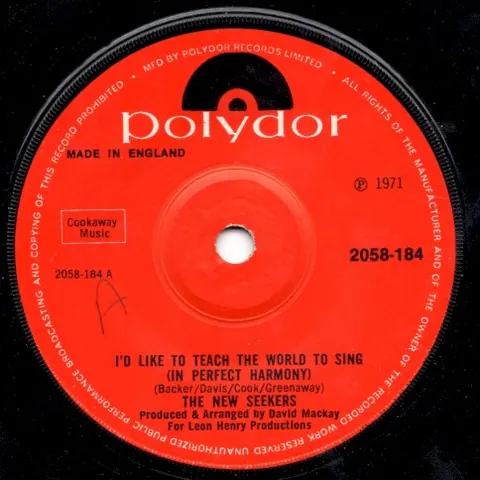
December 3, 1971- Label and catalog number
- Polydor 2058-184
- Format
- 7", 45 RPM, Single
- Runout / matrix
2058184 A // 5∇420 1 1 2Stamped Side A
2058184 B // 8∇420 1 2 3Stamped Side B
Vinyl pressings
by The New Seekers · 1971
I'd Like To Teach The World To Sing was first pressed on vinyl in 1971. Every vinyl pressing is listed below with its label, catalog number and runout codes, so you can tell an original from a reissue.
40 pressings came out in 1971, the album's first year, in 15 countries. Compare the label and catalog number on your copy, then the codes etched or stamped in the runout groove (the dead wax around the label): they are the surest sign of an early pressing.
2058184 A // 5∇420 1 1 2Stamped Side A
2058184 B // 8∇420 1 2 3Stamped Side B
2058184 A // 5∇420Stamped Side A. Variant 1
2058184 B // 8∇420Stamped Side B. Variant 1
2058184 A//1∇420 1 1 1 8Stamped Side A. Variant 2
2058184 B//1∇420 1 1 3 9Stamped Side B. Variant 2
2058184 A // 5∇420Stamped Side A, variant 1 & 2
2058184 B // 8∇420Stamped Side B, variant 1
2058184 B // 6∇420Stamped Side B. variant 2
2058184 A // 6∇420 04 14A-side runout, stamped, variant 1
2058184 B // 7∇420 4 25 04B-side runout, stamped, variant 1
2058184 A // 6∇420 3 04 51A-side runout, stamped, variant 2
2058184 B // 7∇420 1 39 04B-side runout, stamped, variant 2
2058184 A // 1∇420 15 31Stamped Side A
2058184 A // 1∇420 13 34Stamped Side B
Not sure how to read the runout? See matrix numbers, runout and dead wax and how to tell a first pressing.
By decade, oldest first. Open a pressing for its full label, barcode and runout details.
| Year | Country | Label and catalog number | Format |
|---|---|---|---|
| 1971 | Australia | Philips 6006 188First year7", 45 RPM, Mono · Mono | 7", 45 RPM, Mono · Mono |
| 1971 | Australia | Philips 6006 188First year7", 45 RPM | 7", 45 RPM |
| 1971 | Canada | Elektra EKS 45762First year7", 45 RPM, Single | 7", 45 RPM, Single |
| 1971 | France | Philips 6006 188First year7", 45 RPM, Mono · Mono | 7", 45 RPM, Mono · Mono |
| 1971 | France | Philips 6006 188First year7", 45 RPM, Mono · Mono | 7", 45 RPM, Mono · Mono |
| 1971 | Greece | International Polydor Production NHH 2058 184First year7", 45 RPM, Single | 7", 45 RPM, Single |
| 1971 | Ireland | Philips 6006 188First year7", 45 RPM, Single | 7", 45 RPM, Single |
| 1971 | Ireland | Philips 6006-188First year7", 45 RPM, Single | 7", 45 RPM, Single |
| 1971 | Ireland | Philips 6006-188First year7", 45 RPM, Single | 7", 45 RPM, Single |
| 1971 | Jamaica | Elektra EKS-45762First year7", 45 RPM | 7", 45 RPM |
| 1971 | Japan | Philips SFL-1405First year7", 45 RPM, Single, Stereo | 7", 45 RPM, Single, Stereo |
| 1971 | Japan | Philips SFL-1405First year7", 45 RPM, Single, Promo · Promo | 7", 45 RPM, Single, Promo · Promo |
| 1971 | Japan | Philips SFL-1405First year7", 45 RPM, Single | 7", 45 RPM, Single |
| 1971 | Lebanon | Philips Liban 6006188First year7", Single, Mono · Mono | 7", Single, Mono · Mono |
| 1971 | Netherlands | Philips 6006 188First year7", 45 RPM, Single | 7", 45 RPM, Single |
| Year | Country | Label and catalog number | Format |
|---|---|---|---|
| 1987 | Germany | Philips 888 973-77", 45 RPM, Single, Reissue, Stereo | 7", 45 RPM, Single, Reissue, Stereo |
59 vinyl pressings of I'd Like To Teach The World To Sing are listed here, from 23 countries, released between 1971 and 1987.
The earliest pressings are from 1971, in UK, US, Netherlands, Australia and more. One of them is Polydor 2058-184, released December 3, 1971.
Check the catalog number on the label (first-year pressings use 2058-184, EKS-45762, EKS-45762-A, 2058 184) and the codes etched in the runout groove, then compare them with the pressings listed above; for example, 2058184 A // 5∇420 1 1 2 and 2058184 B // 8∇420 1 2 3. Later reissues often keep the catalog number but change the label design or the runout codes.
It depends on which pressing you have and on the condition of the record and its sleeve. Early pressings from the album's home country in near mint condition are usually worth the most; common later reissues are worth far less. Scan your copy with VinylLens to see its value for every grade.